English| EUR
Suggested for you
More currencies
Choose a language
Montevideo sits three hours across the Río de la Plata, close enough for a same-day return yet governed by a separate customs regime and time zone. This guide covers the ferry operators, passport protocols, and the walking circuit through Ciudad Vieja that fits between the first morning crossing and the last evening departure.
Quick answer
A one day trip from Buenos Aires to Montevideo is feasible via high-speed ferry from Puerto Madero or Buquebus terminal, with crossings taking between two and three hours each way. The optimal arrival window is 09:00–17:00, giving you six to eight hours on the ground to explore Ciudad Vieja, the Rambla waterfront, and the Mercado del Puerto before catching the return sailing. Entry to the city and its public landmarks is free, though you must clear Uruguayan immigration with a valid passport.
The Río de la Plata is narrow enough that on clear mornings you can see the low smudge of the Uruguayan coast from the Buenos Aires shore, yet wide enough that the two capitals belong to entirely separate nations with distinct currencies, time zones, and border controls. Montevideo became a practical day-trip destination only after the introduction of fast catamarans in the mid-1990s; before that, the overnight ferry was the sole link, and a same-day return was logistically impossible. Today three ferry operators run multiple daily crossings, the fastest clocking in at two hours fifteen minutes from berth to berth. Departure terminals in Buenos Aires lie in Puerto Madero and Dársena Norte; Montevideo arrivals dock at the terminal in Ciudad Vieja, placing you within five minutes' walk of the colonial grid. Because both legs require full immigration processing—Argentina exit stamps, Uruguay entry stamps, and the reverse on return—you lose roughly forty-five minutes per crossing to queues and passport control, even with an electronic passport. The day trip from Buenos Aires to Montevideo works best when you board the earliest morning crossing, typically departing between 07:30 and 08:30, and return on the final evening sailing around 19:00 or 20:00. That schedule grants six to eight hours in Montevideo, enough to walk the cobbled streets of Ciudad Vieja, climb the observation deck of Palacio Salvo, tour the Mercado del Puerto's ironwork halls, and follow the Rambla south past Playa Ramírez. Entrance to the city and its public squares is free; museums and the Salvo tower charge separate admission, typically between three and eight US dollars. Uruguay operates one hour ahead of Argentina during most of the year, though both countries observe daylight saving on slightly different calendars, occasionally narrowing the gap to zero. Ferry timetables always display local departure and arrival times for each port, so confirm which zone applies before setting an alarm. The cross-border nature of the journey means you cannot use the same mobile carrier plan without roaming fees, and Argentine pesos are not accepted in Montevideo shops—bring US dollars or withdraw Uruguayan pesos from an ATM in the arrival terminal. Weather on the Plata can turn quickly; even in summer, a cold front known as a pampero can whip the estuary into two-meter swells and delay departures by an hour or more. If your return ferry is the last of the day and a storm closes the river, you will overnight in Montevideo unplanned. Check the marine forecast the morning of your trip, and consider booking a refundable return ticket if flexibility matters.
“Montevideo became a practical day-trip destination only after the introduction of fast catamarans in the mid-1990s; before that, a same-day return was logistically impossible.”
This itinerary is designed for travelers taking the morning ferry from Buenos Aires, maximizing exploration time in Montevideo's historic core before the evening return. The plan covers approximately 8 hours on the ground, focusing on walkable Ciudad Vieja and waterfront areas.
Disembark from the ferry terminal and head directly into the Old City, a compact 15-minute walk. Start at Plaza Independencia to orient yourself.
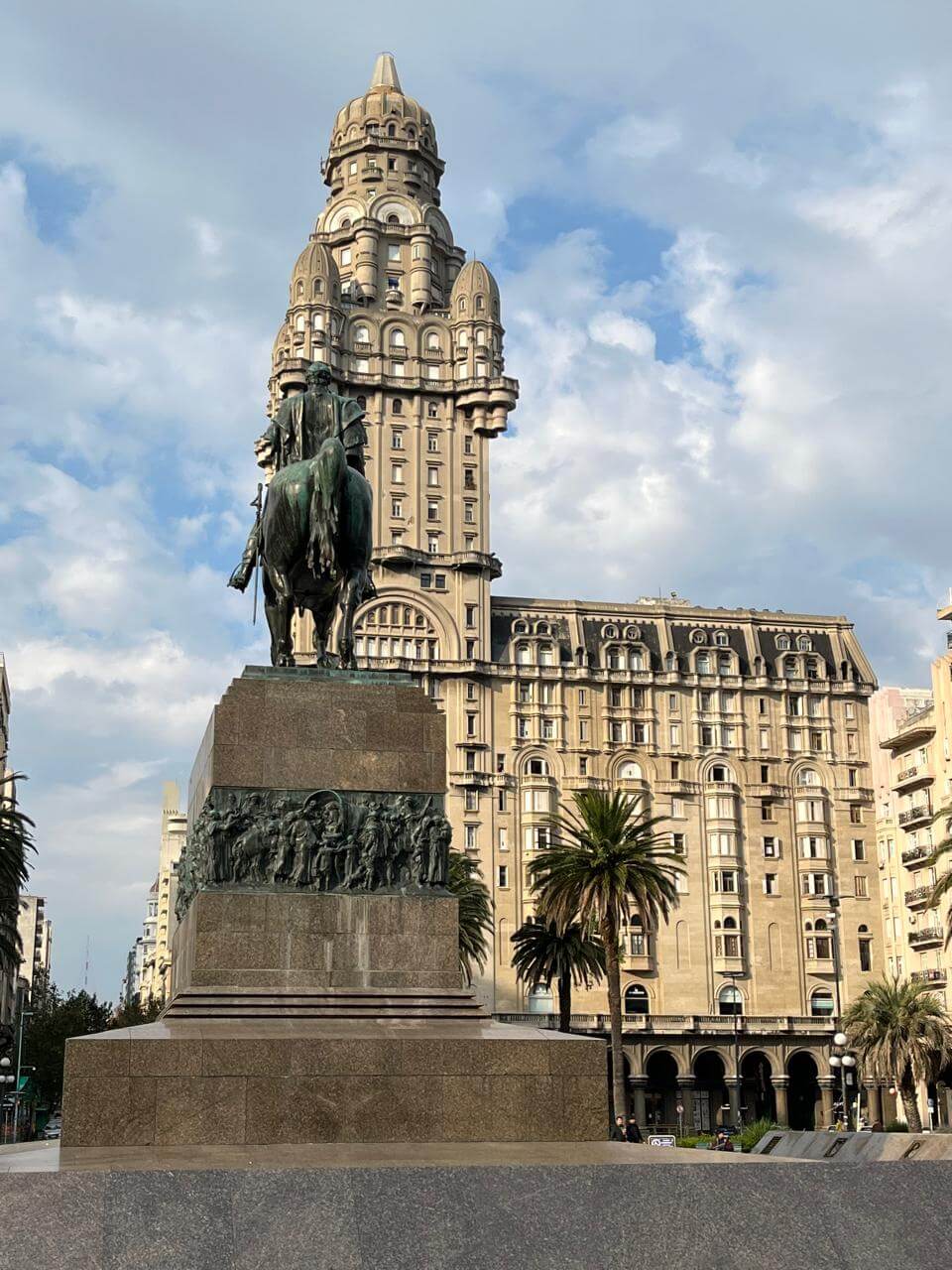
Walk the square where the old city gate once stood, visit the Artigas Mausoleum beneath the monument, and photograph Palacio Salvo's eclectic facade. Allow 45 minutes for the area.
Stroll the pedestrian street lined with colonial buildings, then reach Mercado del Puerto by late morning when the parrillas begin grilling. This is your lunch stop.
Choose one: the Torres García museum for Uruguayan modernism, or the Metropolitan Cathedral for neoclassical interiors. Each takes about 40 minutes.
Head east along the waterfront promenade for open bay views and a sense of local life. Turn back after 30-40 minutes to allow transit time.
Walk back toward the ferry terminal, allowing buffer time for departure formalities. Grab a final coffee near the port if schedule permits.
Montevideo is located across the Río de la Plata from Buenos Aires, making the ferry crossing the most efficient method of travel for a single day trip. Direct sea routes connect the two capital cities, allowing passengers to arrive directly in the capital of Uruguay.
Buquebus ferry from Dársena Norte terminal to Montevideo Port
Colonia Express ferry to Colonia del Sacramento + Bus to Montevideo
For a one day trip, prioritize the best arrival window of 09:00–17:00 to maximize daylight hours for walking tours in Ciudad Vieja. Ensure you coordinate your ferry departure and return times carefully to maintain the required schedule.
A day trip to Montevideo requires budgeting for meals, local transport, and incidental expenses. While public landmarks and city access remain free, travelers should account for variable costs based on personal spending habits.
How to spend less
Verdict: For a one-day visit, a traveler should budget between 35 USD and 70 USD per person to cover food, transport, and incidentals.
Cross-border day trips require valid travel documents and a small amount of preparation to clear immigration smoothly.
Everything you need to know about one day trip from buenos aires to montevideo
Yes, it is feasible to complete a one day trip from buenos aires to montevideo, provided you plan your ferry or flight schedule early. The transit across the Rio de la Plata takes several hours, so an early departure is recommended to maximize your time in the city.
You must carry your passport as you are crossing an international border between Argentina and Uruguay. Always ensure your travel documents are valid for the duration of your stay to avoid issues at customs.
There is a 0 USD entrance fee for the city and its public landmarks, making sightseeing very accessible. While individual museums may have their own policies, walking tours of the historic district remain free.
The best arrival window is 09:00–17:00 to ensure optimal daylight for walking tours in Ciudad Vieja and visiting museums. Arriving during this period allows you to experience the main attractions while they are fully operational.
You can easily explore many historical landmarks during a one day trip from buenos aires to montevideo, especially within the Ciudad Vieja district. This area is dense with colonial architecture, plazas, and cultural sites that are perfect for a short visit.
Travelers typically utilize ferry services that connect the two capitals across the estuary. You should check the official schedules to align your transit with the recommended arrival window for your excursion.